Skip to content

The best cross-country ski sets for 2026

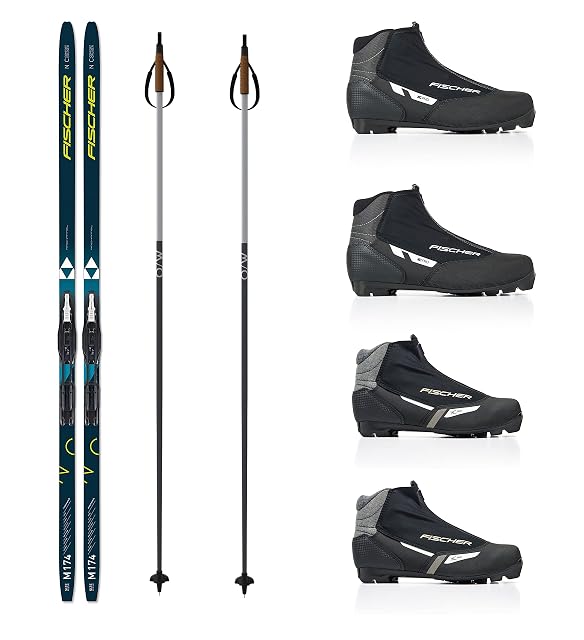
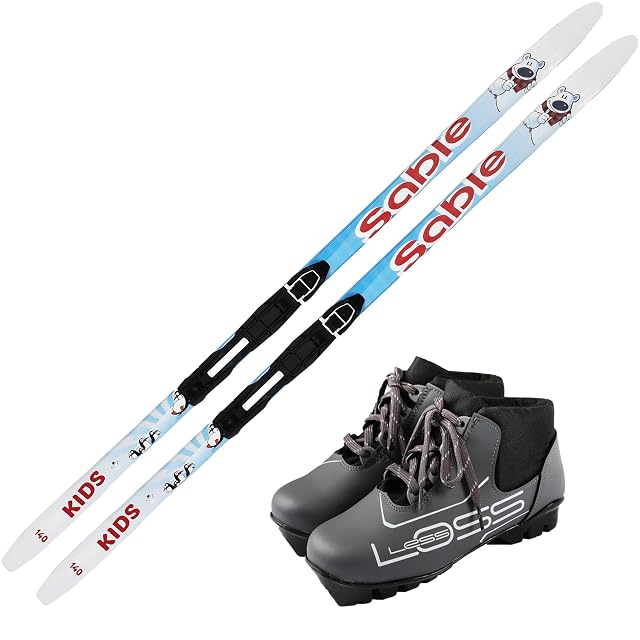
Two complete classic sets, one for adults and one for children, both from European sellers with no US offer when checked. The Fischer Comfort Cruiser includes skis, a mounted IFP binding, boots and poles, sized by total weight from 164 to 189 cm; the Skiwax Panda junior set has waxless scales and an NNN binding but no poles. Classic skis are chosen by weight, not height, and the binding system must match the boots — a set solves both.

Top-rated cross-country skis on Amazon.com

The 2 highest scores among the 2 cross-country skis we cover that have a checked Amazon.com listing. Scores are out of ten and only compare models inside this category.

#ModelOur scorePriceBuy
1Fischer Comfort Cruiser set, 184 cmBest for: A beginner on groomed classic trails who wants skis, binding, boots and poles in one order and weighs 176 to 207 lb dressed 7.8/10See AmazonCheck price on Amazon: Fischer Comfort Cruiser set, 184 cm
2Skiwax Europe Panda junior set, 120 cmBest for: A child of about 49 to 66 lb starting classic cross-country on groomed trails, whose parents want skis and boots in one order 7.8/10See AmazonCheck price on Amazon: Skiwax Europe Panda junior set, 120 cm

Prices are indicative and were read on Amazon.com; the button shows the current one. If we earn a commission, it does not change the order.

Two complete classic sets, one for adults and one for children, both from European sellers with no US offer when checked. The Fischer Comfort Cruiser includes skis, a mounted IFP binding, boots and poles, sized by total weight from 164 to 189 cm; the Skiwax Panda junior set has waxless scales and an NNN binding but no poles. Classic skis are chosen by weight, not height, and the binding system must match the boots — a set solves both.

Every published figure on this shelf, in one table

  1. Fischer Comfort Cruiser set, 184 cm

    184 cm classic cruiser set for 176–207 lb total weight: skis, Compact Step-In IFP binding, boots and poles

    A complete classic cross-country package — wide cruiser skis, a mounted IFP binding, Fischer boots and poles — sized by total weight, with no seller on Amazon.com when read.

    Best for: A beginner on groomed classic trails who wants skis, binding, boots and poles in one order and weighs 176 to 207 lb dressed
    7.8/10

  2. Skiwax Europe Panda junior set, 120 cm

    120 cm children’s classic set for 49–66 lb: waxless skis, NNN binding and NNN boots

    A children’s classic cross-country set with waxless scales, a mounted NNN binding and boots in EU 32–36, sized by weight — and no seller on Amazon.com when read.

    Best for: A child of about 49 to 66 lb starting classic cross-country on groomed trails, whose parents want skis and boots in one order

    7.8/10

By need, across cross-country skis

Choose length by your weight

In cross-country, length is indexed to the skier’s weight, not to height. The wrong length makes the grip zone ineffective, or makes gliding impossible.

Decide between classic and skating

Two techniques, two skis. Classic has a grip zone and moves in a diagonal stride; skating has none and skates. One ski does not do both.

Not have to wax every time

A scaled base grips without wax. That is what lets you set off with no preparation, at the cost of a little glide and a little noise.

Across cross-country skis, who each type suits

Recreational, in set tracks
A scaled classic ski, sold with bindings fitted, is put on and off you go. That is what most of the sets in this aisle cover.
A complete set in one go
Several references arrive with boots, poles and a bag. It is the shortest route to a first outing, and the system’s coherence is already sorted.
Skating
Skating skis are often sold on their own, without bindings, because the choice depends on the boot. They need a wide groomed trail and a learned technique.

The trade-offs to weigh on cross-country skis

Scales against wax
Scales grip in all weather and ask for nothing. A waxed ski glides better and more quietly, and demands preparation before every outing.
A fitted set against choosing separately
A set guarantees that binding and boot speak to each other. Choosing separately lets you target a specific system, and means checking compatibility yourself.
A weight range stated per length
The listing gives a weight bracket for the length on sale. Sitting at either end of that bracket pushes you to the neighboring length.

What gets asked about cross-country skis

How do you choose cross-country ski length?

From the weight range the listing states for that length. Weight governs flex, and therefore how the grip zone meets the snow — the skier’s height is not enough.

Classic or skating to start?

Classic, because it is learned in a track and it forgives. Skating demands technique and a wide groomed trail before it becomes enjoyable.

Are scales very noisy?

They can be heard on hard snow, and that is part of the trade-off. In return they grip without wax, across a wide range of conditions.

What is a grip zone?

The part of the base, under the foot, that grips to allow the push. It only touches the snow when the ski is loaded, and flex is what sets that.

Prolink, IFP, NNN — does it matter?

Yes, because binding and boot have to belong to the same system. A set sold with bindings fitted has already settled the question; buying separately has not.

Can a skating ski be used for classic?

No. It has no grip zone, so there is nothing to grip for the diagonal stride. That is a design limit, not an adjustment.

Do scaled skis need waxing?

Not in the grip zone. Glide wax on the tips and tails improves glide and protects the base, and remains optional.

Are poles chosen with the skis?

Their length depends on the discipline: shorter for classic, longer for skating. The sets in this aisle supply them already matched to the ski.

The essentials of cross-country skis

Weight governs length, technique governs discipline, and the base governs preparation. Fitted sets remove the question of binding-to-boot compatibility: that is their real value, more than the price.