Skip to content

Replacement goggle lenses, compared

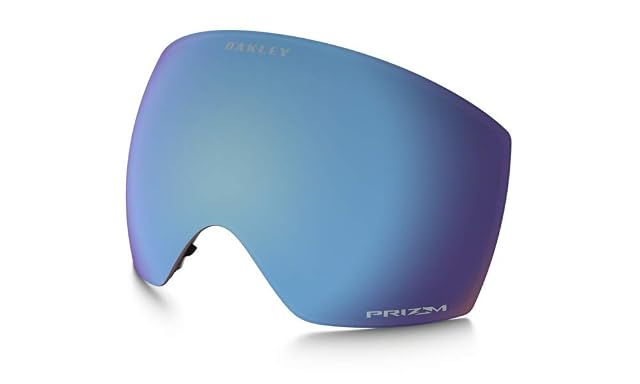
A replacement lens fits one goggle family in one size, so the first question is the frame, not the tint. The lens reviewed here is Oakley’s Prizm Sapphire Iridium for the Flight Deck M, about $96 on Amazon.com, in Plutonite with 100% UV filtering. Its light transmission is not printed on the listing; Oakley’s lens chart gives it.

A replacement lens fits one goggle family in one size, so the first question is the frame, not the tint. The lens reviewed here is Oakley’s Prizm Sapphire Iridium for the Flight Deck M, about $96 on Amazon.com, in Plutonite with 100% UV filtering. Its light transmission is not printed on the listing; Oakley’s lens chart gives it.

Every accessory here, figure by figure

  1. Oakley Flight Deck M replacement lens, Prizm Sapphire Iridium

    Oakley Prizm Sapphire Iridium lens, Flight Deck M

    A genuine Oakley Prizm Sapphire Iridium replacement lens for the Flight Deck M goggle only, in Plutonite with 100% UV filtering — about $96, light transmission not printed.

    Fits
    Oakley Flight Deck M goggles only
    Tint
    Prizm Snow Sapphire Iridium
    Material
    Plutonite
    UV protection
    100%
    Optics
    High Definition Optics (HDO)
    Light transmission
    Not published on the listing
    Part number
    101-104-012
    Amazon.com reference
    B00T3KJ9JG
    • A genuine Oakley Prizm lens, tuned for snow contrast
    • Plutonite lens with 100% UV filtering and HDO optics
    • Fits only the Flight Deck M frame

    Best for: An owner of an Oakley Flight Deck M who wants a bright-light Prizm lens

    7.8/10 ≈ $96
    Check price on Amazon

By need, across goggle lenses

Fit your goggle, and only yours

A spare lens is a spare part: it is chosen by goggle reference, not by shape. That is the first line of every listing in this aisle, and the only one that decides.

Match the light of the day

A dark lens under cloud flattens the relief and makes you miss the bumps. The filter category should say so, and this aisle never publishes it.

Not fog up

A double lens creates an air gap that limits condensation, and an anti-fog treatment adds to it. That is what decides visibility at the end of a climb.

Across goggle lenses, who each type suits

Replacing a scratched lens
You start from the goggle’s exact reference. A shape that looks identical guarantees neither the seal nor the fit in the frame.
Two lenses for two kinds of weather
A clear lens for overcast, a tinted one for sun, and a quick-change system. It is the safest answer as long as categories go unpublished.
Helmet visors
Some replacement lenses fit a helmet visor rather than a goggle, so check which you own. Those are two different parts, and the listing says which.

The trade-offs to weigh on goggle lenses

Double lens against price
The air gap of a double lens is what delays fogging. It is a more expensive construction, and the first thing a cheap lens saves on.
Quick change against seal
A magnetic or lever system lets you change lenses with gloves on. Every fixing point is also somewhere the seal can sit badly.
Filter category never published
No listing in this aisle states its category, from S0 to S4. Without it, the tint visible in a photo is the only clue, and it is an unreliable one.

What gets asked about goggle lenses

How do you know a lens fits your goggle?

By the goggle’s reference, which listings in this aisle name explicitly. Two lenses of similar shape are not interchangeable: the seal and the frame decide.

What do categories S0 to S4 mean?

They describe how much light the lens lets through: S0 for night and fog, S4 for very strong sun at altitude. No listing in this aisle publishes that figure.

Does a photochromic lens save having two?

It covers a range of light levels instead of one point, which avoids changing. Its transition takes time and its range is not unlimited: it is not the equal of two well-chosen lenses.

Why does my lens fog up?

Because warm, humid air meets a cold surface — typically at the end of a climb, or at a standstill. A double lens and good goggle ventilation delay it; wiping the inside makes it worse.

Can you clean the inside of a lens?

As little as possible: the anti-fog coating is a fragile layer that rubs off. You let it air-dry, and wipe only with the original microfibre bag, dry.

Is a mirrored lens worth anything?

It reflects part of the light before it enters, which helps in high brightness. The coating wears and scratches, and it does not replace a suitable filter category.

Should you buy a new goggle rather than a lens?

If the face foam is packed down or the strap slack, yes. A new lens on a tired goggle lets air in, and air that gets in is what fogs.

Is a case included?

This aisle practically never states it. A spare lens carried unprotected scratches in the pack, and scratches on the side that shows.

The essentials of goggle lenses

This aisle is chosen by goggle reference and nothing else: a similar shape is not enough. The double lens and the anti-fog treatment decide visibility, the change system decides convenience. And the figure that would matter most — the filter category — is published on no listing at all: ask the manufacturer.

The live figure beside a product went and asked the shop for it the moment this page opened; any amount written into the text has not moved since the sentence was drafted, and it is the first of the two that counts.