Skip to content

Choosing snowshoes, by size, binding and terrain

Snowshoes are the cheapest way into winter backcountry, and the easiest to get wrong: too small and you sink, too aggressive and you pay for traction you never use. This guide picks six models with sellers on Amazon.com and orders them by the kind of walking they suit.

Six snowshoes with sellers on Amazon.com, in the order a new snowshoer is most likely to need them.

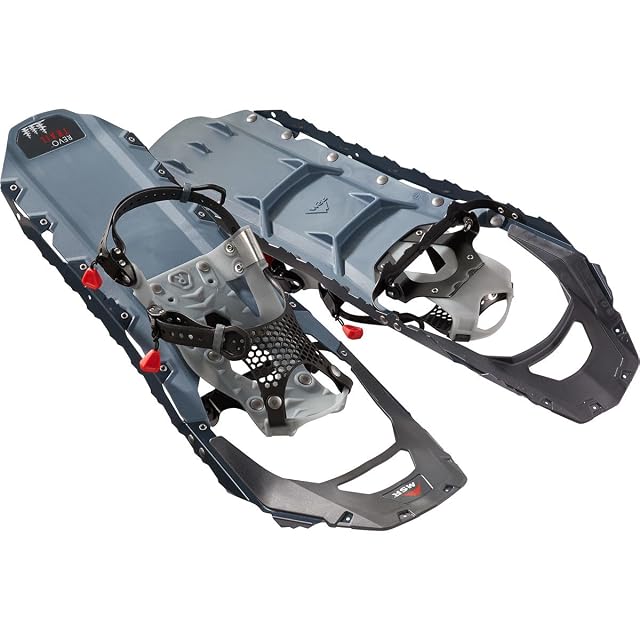
1. For most trail walking: MSR Revo Trail

A 22 × 8 in molded deck with a steel crampon and perimeter teeth, Paraglide mesh bindings that take nearly any shoe, and attachment points for 5 in flotation tails. MSR publishes the size, the weight (3 lb 10 oz a pair) and the shoe range. It is the safest all-round choice. About $220.

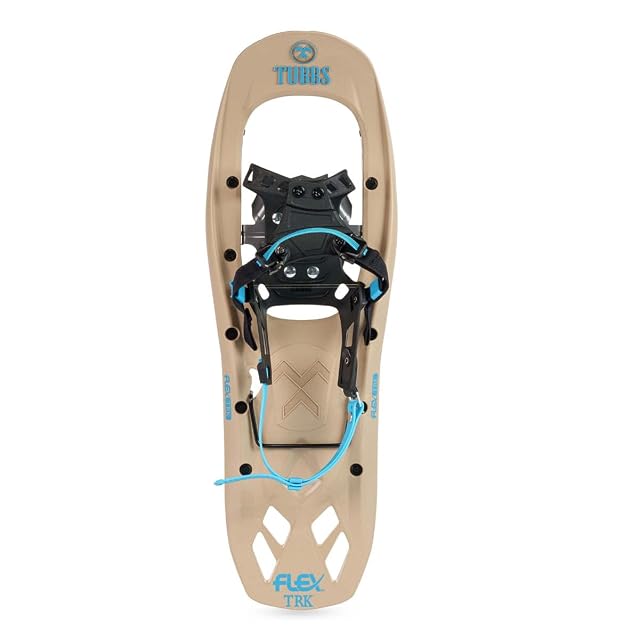
2. For a beginner on a budget: Tubbs Flex TRK

Tubbs’s day-hiking snowshoe for beginners to intermediates, with a Flex Tail that rolls the foot naturally, a toe crampon with traction rails and a 16° heel lift. About $144.

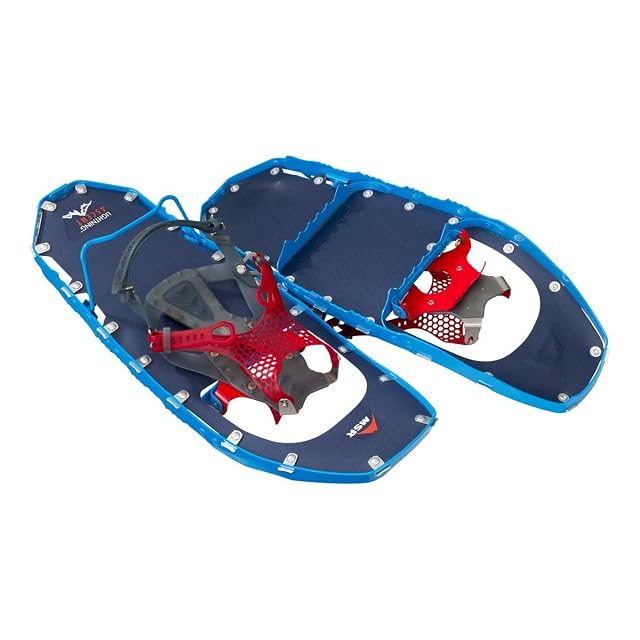
3. For steep and icy ground: MSR Lightning Ascent

The most technical snowshoe on this shelf: a 360° traction frame, steel DTX crampons, a 180 lb load rating, 4.18 lb a pair, made in the USA. Expensive at about $400, and only worth it where the traction is needed.

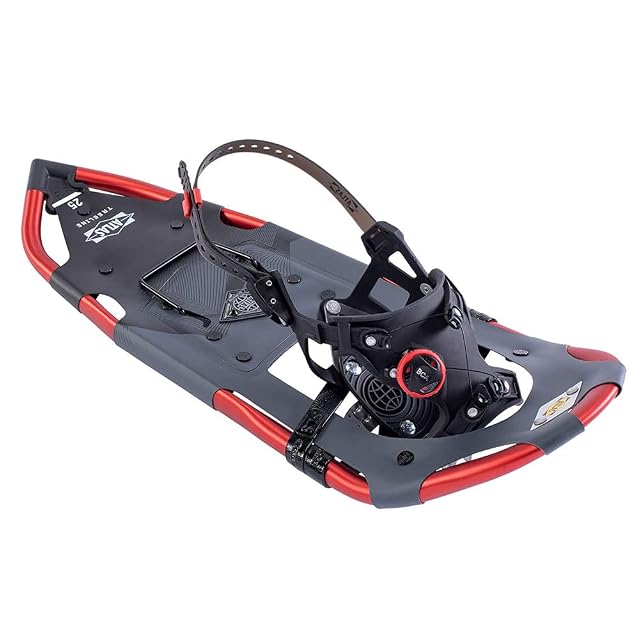
4. For a precise fit: Atlas Treeline

A BOA dial binding, Spring-Loaded Suspension and an aluminum Reactiv frame, in 25 in. Amazon.com lists it under K2, which owns Atlas. About $263.

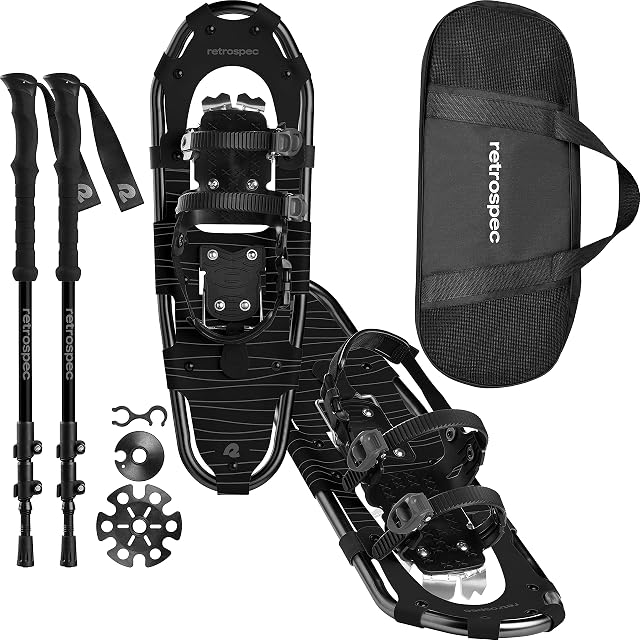
5. For a complete cheap kit: Retrospec Drifter with poles

Aluminum-frame 25 in snowshoes, ratchet bindings, adjustable poles and a carry case for about $90. Fine for easy trails; the traction is basic.

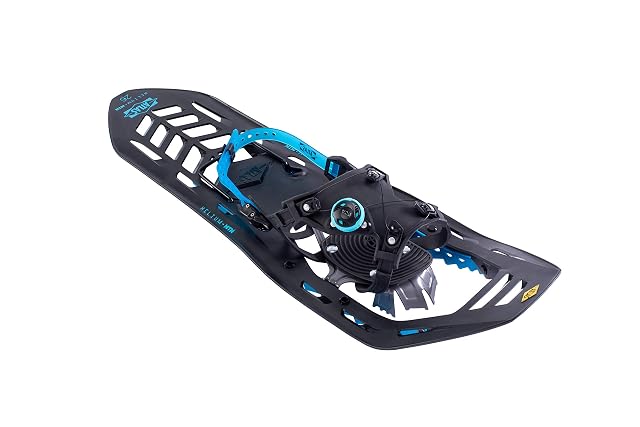
6. For deep snow or heavy loads: Atlas Helium-MTN 30

The largest size on the shelf, with a louvered deck and a Boa closure. About $220.

How to choose between them

Size by load first. Weigh yourself with your winter pack. Most makers publish a load range per size; several listings here do not, so check the maker’s chart.

Then traction by terrain. Packed, gentle trails need little. Side slopes and icy crust need crampons along the frame, not just under the toe.

Then the binding. Straps are cheap and reliable; BOA dials and soft mesh are easier with gloves.

The TSL Symbioz models on this shelf are also available; see the snowshoe shelf for all nine.

Prices quoted in this text were read on November 7, 2026. The live price is at the top of the page.
The list, and why it is in this order

  1. MSR Revo Trail 22 in

    22 × 8 in ExoTract deck with steel crampon, Paraglide bindings, 3 lb 10 oz a pair, shoe sizes M3–13 / W5–15

    MSR’s Revo Trail, a molded-deck trail snowshoe with steel traction, Paraglide mesh bindings that take nearly any footwear, and add-on flotation tails — about $220.

    Best for: A day hiker on trails and rolling terrain who wants grip, easy bindings and the option of adding flotation later

    8.0/10

    ≈ $220

  2. Tubbs Flex TRK 22 in

    22 in composite day-hiking snowshoe, Torsion Deck, Flex Tail, Quick-Fit binding, 16° ActiveLift

    Tubbs’s Flex TRK, a beginner-to-intermediate day-hiking snowshoe with a Torsion Deck, a Flex Tail for a natural stride and a 16° heel lift — about $144 on Amazon.com.

    Best for: A beginner or intermediate day hiker who wants a natural stride and easy bindings

    7.8/10

    ≈ $144

  3. MSR Lightning Ascent 22 in

    8 × 22 in technical snowshoe, 4.18 lb a pair, up to 180 lb load, 360° traction frame, DTX crampons, Paragon bindings

    MSR’s lightest, most technical snowshoe: 4.18 lb a pair, a 360° traction frame, steel DTX crampons and an Ergo Televator heel lift, made in the USA — about $400 on Amazon.com.

    Best for: A hiker or mountaineer under about 180 lb with pack who climbs steep, icy or traversing terrain

    8.4/10

    ≈ $400

  4. K2 Atlas Treeline 25 in

    25 in snowshoe, Reactiv aluminum frame, Spring-Loaded Suspension, All-Trac crampon, BOA binding, heel lift

    Atlas’s Treeline with a BOA dial binding, Spring-Loaded Suspension, an aluminum Reactiv frame and an All-Trac toe crampon — about $263 on Amazon.com in 25 in.

    Best for: A hiker who wants a precise BOA fit and good traction on rolling and mountain trails

    7.8/10

    ≈ $263

  5. Retrospec Drifter 25 in with poles

    25 in aluminum-frame snowshoes with poles and carry case, full-floating pivot, double-ratchet bindings

    A complete beginner kit for about $90: 25 in aluminum snowshoes with a floating pivot and ratchet bindings, adjustable poles and a carry case — the cheapest way onto the snow here.

    Best for: A beginner who wants snowshoes, poles and a bag in one inexpensive order for easy trails

    7.2/10

    ≈ $90

Questions this guide leaves open

What size snowshoe do I need?

Size by total load — your weight plus clothes and pack — and by snow type. A 22 in snowshoe suits most hikers on packed trails; heavier loads or deep powder call for 25 to 30 in. MSR states 180 lb for its 22 in Lightning Ascent.

What is a heel lift for?

A bar that raises the heel on steep climbs, so the calf is not stretched for an hour. Tubbs gives 16° on the Flex TRK; MSR calls its version the Televator.

Do I need poles with snowshoes?

They help a lot with balance on side slopes and getting up after a fall. The Retrospec Drifter kit includes them.

Are cheap snowshoes OK?

For flat or rolling trails, yes. On steep or icy terrain, traction becomes a safety feature, and frame-edge crampons like MSR's are worth the price.

Each pair, and the snow it was built for

MSR 13622 · $220

For snow that: A day hiker on trails and rolling terrain who wants grip, easy bindings and the option of adding flotation later

Its strongest side: Size, weight and shoe-size range all published

Its weakest side: The load limit is not stated on this listing

Read the full review: MSR 13622 →

Tubbs 69701 · $144

For snow that: A beginner or intermediate day hiker who wants a natural stride and easy bindings

Its strongest side: A Flex Tail that rolls the foot heel to toe like walking

Its weakest side: No load limit or weight

Read the full review: Tubbs 69701 →

MSR 13076 · $400

For snow that: A hiker or mountaineer under about 180 lb with pack who climbs steep, icy or traversing terrain

Its strongest side: Every figure published: size, weight per pair, load and shoe-size range

Its weakest side: About $400, a high price for a snowshoe

Read the full review: MSR 13076 →

K2 16E0002.1.1.25 · $263

For snow that: A hiker who wants a precise BOA fit and good traction on rolling and mountain trails

Its strongest side: A BOA dial binding: one turn tightens it evenly, even with gloves

Its weakest side: No load limit or weight on the US listing

Read the full review: K2 16E0002.1.1.25 →

Retrospec 5312 · $90

For snow that: A beginner who wants snowshoes, poles and a bag in one inexpensive order for easy trails

Its strongest side: Snowshoes, adjustable poles and a carry case for about $90

Its weakest side: No load range for the 25 in size

Read the full review: Retrospec 5312 →

Atlas U200101301300 · $220

For snow that: A heavier hiker, or anyone carrying a big pack, who needs maximum flotation in soft snow

Its strongest side: 30 in: a large snowshoe, for flotation in deep snow or with a heavy pack

Its weakest side: No load limit, though a 30 in size is chosen precisely for load

Read the full review: Atlas U200101301300 →

What each band of spending rides

Entry level

$90 – $220

3 models

Mid range

$220 – $263

3 models

Upper range

$290 – $400

3 models

One line, then the rest

Pairings that narrow the choice

One pair against another, where the comparison is already published.

What this selection is based on

The equipment above comes from the catalog of this site. Specifications are the published ones, from the manufacturer and from Amazon; prices are the Keepa figure on the date shown, and both shift. Ranking uses declared specifications, stated strengths against stated limits, and price. Nothing here has been taken down a slope by us, and no page pretends otherwise.

Last checked on