Reading the listing
Skis sold flat, and what the page is not telling you
Three words on a listing change its price by a hundred euros or more, and two of them are easy to miss: "flat", and "ohne Bindung". A ski sold that way needs a binding bought separately and a workshop to mount and set it, and the shelf price does not include either. This page puts four listings side by side so the gap is visible.
By Jean-Benoit Buisson
Four listings, and the difference between them is a sentence.
1. The dearest ski on this site, sold flat
The HEAD touring ski is 163 cm, sold flat — no binding — with its level stated as expert.
It is the dearest ski here before you have bought anything that attaches you to it. A touring binding is not a cheap component, and the real cost of this ski is meaningfully higher than the page shows.
2. The one where flat is the right answer
The Rossignol skating ski is sold flat, and on that shelf it is defensible: a skating boot decides the binding system, and buying the ski before the boot would be the wrong order.
Two facts that belong together, and the listing states both.
3. The comparison: a ski sold as a system
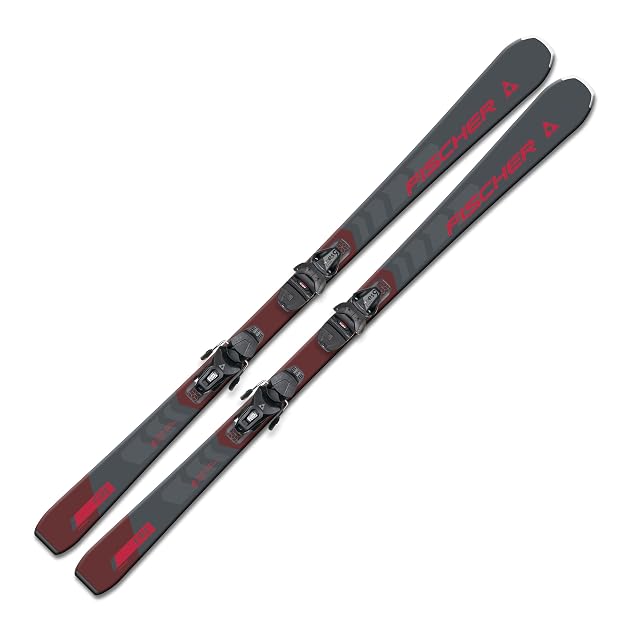
The Fischer alpine set publishes three widths, a radius at a named length, an ability band, and a binding with its DIN range printed — Z 2.5 to 9.
Everything that has to be decided is decided, and the number a workshop will set is visible before purchase. That is what a system ski looks like when the listing is complete.
4. What a binding actually costs, at two ends of the shelf
The Tyrolia here publishes DIN 4–14, a 110 mm brake, 17 mm stand height and 865 g — a wide-brake binding for a wide ski, fully specified.
The Look below it is a beginner binding with a 76 mm brake and GripWalk in its model name.
Those two brake widths are the whole compatibility question. A 76 mm brake will not clear a ski 87 mm at the waist, and the flat ski you were about to buy has a waist printed on its page for exactly that reason.
The rule this page comes down to
A price comparison between a flat ski and a system ski is not a comparison. Add a binding from the binding shelf and a workshop visit, then compare.
Questions this guide leaves open
How do I tell whether a binding is included?
Look for a binding model name and a DIN or Z range in the listing. "Flat", "ohne Bindung" and "sold flat" mean no binding. A ski that names something like "Z 2.5–9" beside a model name is sold as a system; a ski that names only a length and a level usually is not, and this site states it on every ski page.
Can I move a binding from my old skis?
Sometimes, and it is a workshop question, not a website one. It depends on the old binding’s condition and age, the new ski’s width at the mounting point, and whether the brake is wide enough — a brake narrower than the ski will not clear it. Brake width is published on several bindings on this site for exactly that reason.
Why is the skating ski sold flat?
Because a skating boot decides the binding, and the two systems on that shelf are not interchangeable. That is the one case on this site where "flat" is a reasoned choice rather than an omission, and the page says so.
What does mounting cost?
This site does not publish workshop prices, because they vary by country and by shop and a figure written here would be out of date within a season. What this page can tell you is that it is never zero, and that the binding itself is the larger part of the gap.